AI and agriculture have not been discussed in much detail as we often relate AI to financial trading and other technology, such as automated customer service.
However, many of the most exciting developments are occurring in the field (actually!).
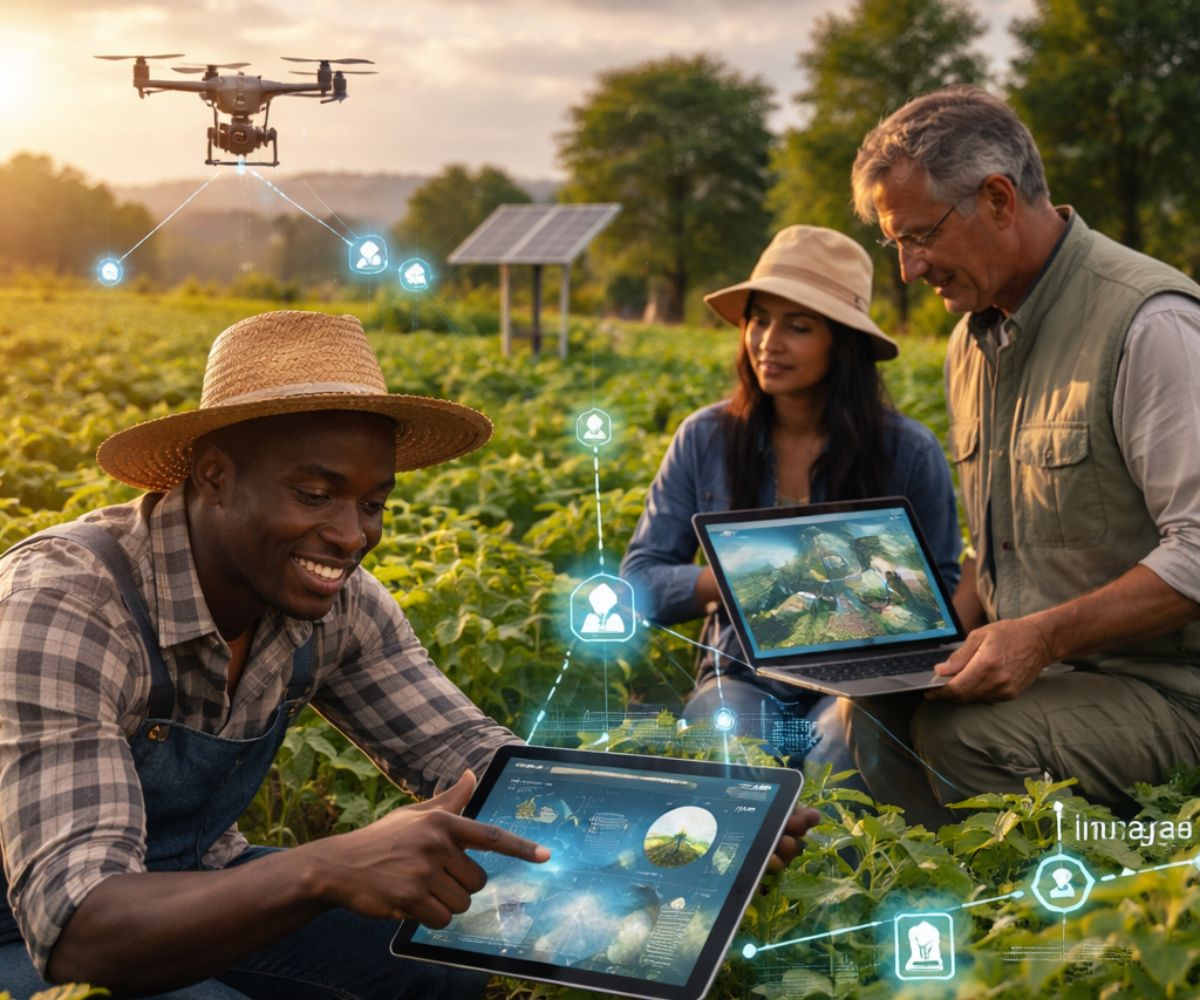
For example, in Southeast Asia, there is an app that provides satellite-based crop health alerts directly to rice farmers on their cellphones. And in parts of Africa, there are AI tools available that analyze weather patterns and soil health data to help farmers determine when they should plant their crops. While this may sound like science fiction, it is actually quite real. That may be the real reason why this is so important.
Check out: Financial Inclusion and the Expanding Digital Economy
Using Data to Reduce Agricultural Risk
Agriculture has traditionally been one of the most unpredictable industries. From rain patterns shifting each year, to pest infestations, to fluctuating market prices, for many smallholder farmers, a bad year can be devastating.
By providing early warning systems on drought stress and diseases due to the combination of satellite images, historical weather information and current local crop conditions, AI can help reduce the amount of uncertainty about agricultural risks.
For example, a cooperative in Kenya is now using AI-based systems to monitor crops and then advise farmers on when to use fertilizers. The first year the yields from the farms that used this information increased slightly due to better timing. However, the impact of hundreds of farms with increased yield due to better fertilizer timing was significant enough to provide a materially positive effect on the pre-existing income levels of the farmers.
Unlock Premium Content
Subscribe to our newsletter to read the full article.