

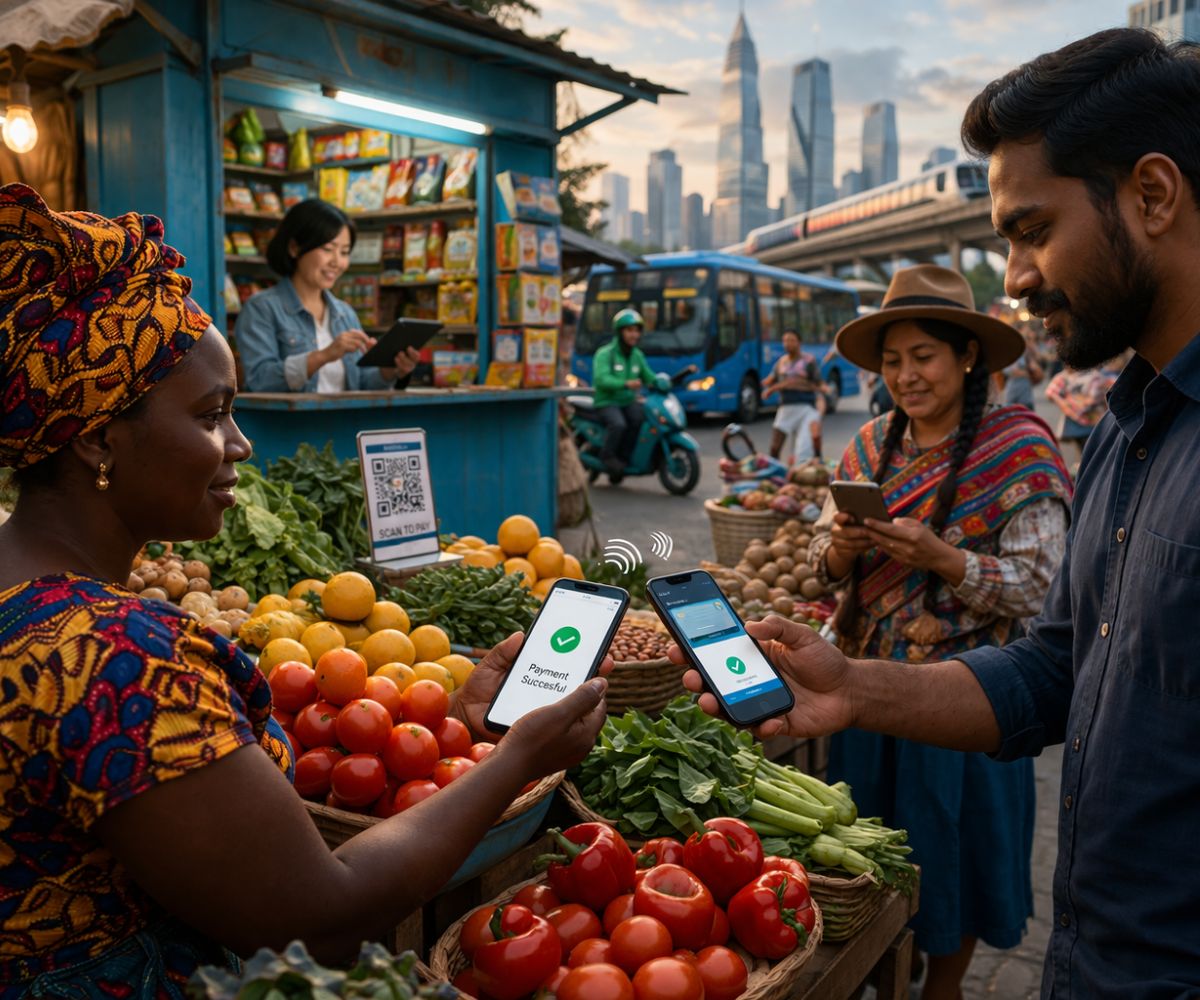
For many years, proving that everyone had appropriate access to financial services was something that showed up in development reports and policy discussions, but it was often a very abstract idea, even if it sounded great to many people. This has begun to change, however.
Across many areas of the world, mobile technology is increasingly becoming a bank branch through the use of smartphones by millions of people to access financial services (e.g. talk to your bank; pay your suppliers etc.) No merchant in Nigeria has to be concerned about building a bank branch so that they can accept mobile payments, and any taxi driver in Kenya is able to access micro-credit through a mobile wallet. These changes may feel very incremental, but they are having a large and cumulative effect on increasing the number of people participating in the economy.
Financial Inclusion is slowly transforming into a growth engine for digital economic growth, and not only as a means of achieving social objectives.
Digital Platforms are Recreating Market Access
Take for example a small-scale farmer selling produce. The reality of the situation is that their financial footprint is non-existent to lenders, as there is no formal credit score – limited or no documentation.
Unlock Premium Content
Subscribe to our newsletter to read the full article.