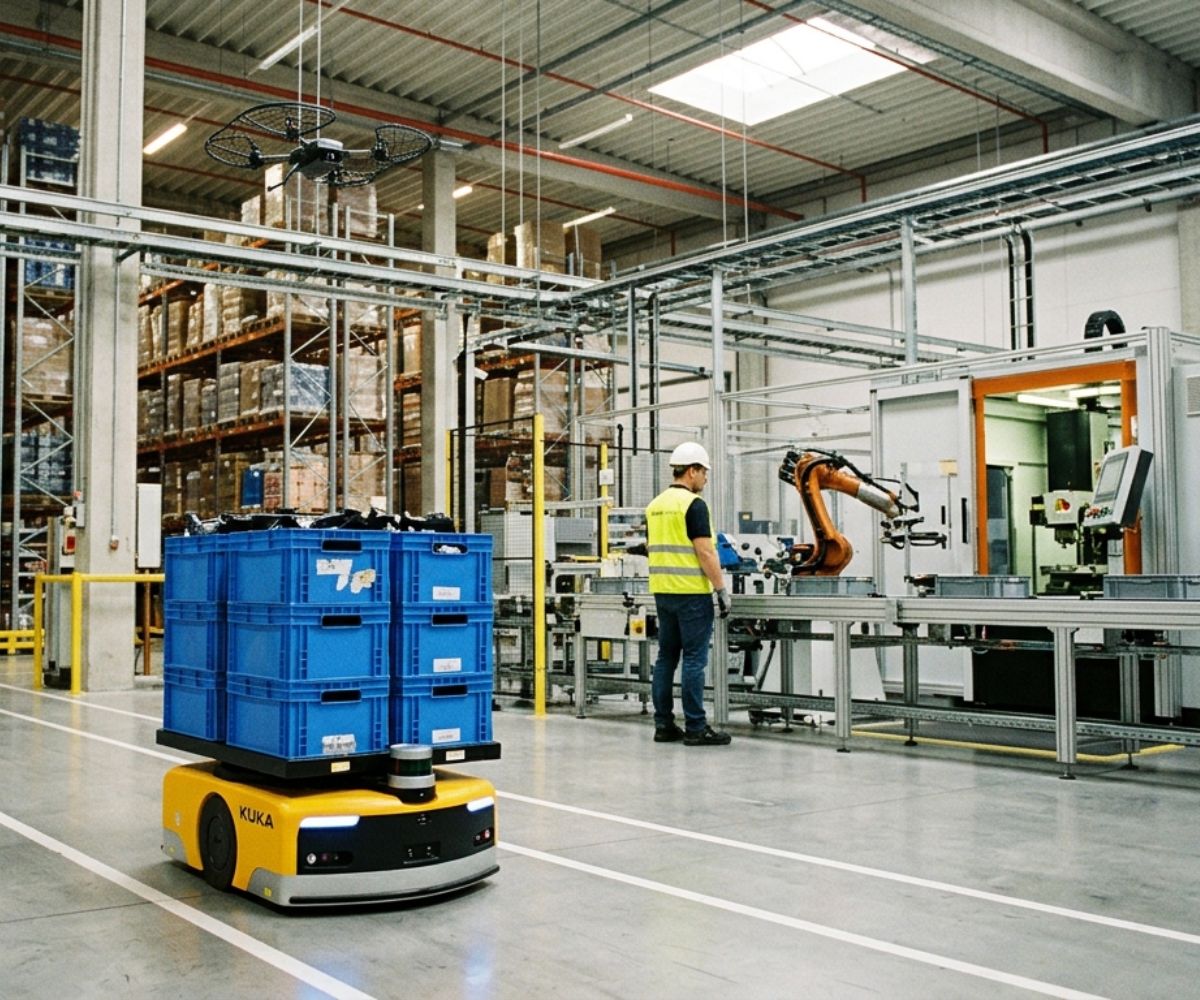
As physical AI allows for real-world movement of products and people, it enables automated sensing and actions to occur. Locations where warehouse robots automatically sort packages. Drones scan infrastructure. Autonomous vehicles drive through factories. These advancements are no longer futuristic or in the distant future.
A real-life example of this would be the creation of robots utilized at a logistics hub to automate the movement of packages. These robots do not operate strictly on pre-determined paths. Instead, they will interact with their environment and adapt to the conditions as they develop. For example, robots can change their routes based on where other robots are currently positioned, as well as be able to anticipate traffic issues, thus enabling them to avoid delays.
While the efficiencies gained through these technologies are very noticeable, physical AI creates new possibilities for how things function in an artificially intelligent manner. One example is the complexity that comes from operating in a physical environment compared to a digital one. The reality of the physical environment is that it is messy, and things can go wrong. For example, sensors can fail, lighting can change, and/or obstacles can be encountered. Therefore, AI models must account for the level of uncertainty that is possible in the digital space; these uncertainties do not exist in a digital world.
You might be interested in: Is Your Board Future-Ready?
Furthermore, there is an increased need for safety to be at the forefront of creating and operating using physical AI applications. In a digital system, if AI software miscalculates something, it would provide a bad recommendation to a user, but in the physical realm, this could lead to the physical destruction of property or the loss of a human life.
With that being said, the possibilities for using physical AI in manufacturing and logistics are growing exponentially. For example, there are manufacturing lines that currently adjust themselves instantaneously based upon their operating conditions. Additionally, drones can be deployed to evaluate crops and optimize irrigation in real-time. The line between making a decision and taking action in the physical realm is rapidly disappearing.
So then, physical AI cannot be viewed as just an extension of AI or digital intelligence but should be seen as a transition toward creating systems that work together to accomplish the same physical task while directly participating in operations. These developments are happening quietly but will have an enormous impact.